


Pick up three tubes in the toothpaste aisle and odds are one says fluoride-free on the front. It used to be a back-label detail. Now it's a feature. The question underneath is usually the same: is fluoride-free toothpaste good, or is it a step backward dressed up as a choice?
The honest answer has two halves. Fluoride is the best-tested cavity-prevention ingredient in dentistry, and the American Dental Association and the CDC both recommend it. Fluoride-free toothpaste can still be the right call for some people, as long as they know what it does and doesn't do. That applies to Feno Foam too. We sell a fluoride-free foaming toothpaste, so we'd rather be exact about its limits than vague about its benefits.
TL;DR
- The ADA and CDC recommend brushing twice daily with fluoride toothpaste; decades of trials back that.
- In the U.S., fluoride toothpaste is an OTC drug; a fluoride-free paste is a cosmetic that cleans.
- Nano-hydroxyapatite has promising trial data; xylitol and arginine were mostly tested alongside fluoride.
- Fluoride-free suits people who get fluoride another way or accept the trade; ask a dentist first if you're high-risk.
Chapter 1 of 6
What fluoride does, and why dentists keep recommending it
Fluoride is a mineral. Sitting on the tooth surface, it helps rebuild enamel that acid has started to dissolve. The ADA describes the mechanism plainly: fluoride remineralizes the calcium hydroxyapatite structure in enamel by forming fluorapatite, a version that is more resistant to acid attacks. The CDC adds that fluoride may also reduce the amount of acid that cavity-causing bacteria produce.
That's why the ADA and the CDC say the same thing: brush at least twice a day with fluoride toothpaste. In the fluoride vs fluoride-free toothpaste debate, this is the one claim that doesn't need qualifying.
The evidence base is large and consistent
A Cochrane review pooling 70 trials and about 42,300 children found that fluoride toothpaste prevented roughly 24% of new decayed, missing or filled tooth surfaces compared with a non-fluoride paste (Cochrane Database of Systematic Reviews, 2003). The 2019 update covered 96 trials. It found high- to moderate-certainty evidence that 1,000 to 1,500 ppm fluoride toothpaste reduces cavities in children and adolescents, and moderate-certainty evidence that 1,000 to 1,100 ppm reduces decay in adults as well (Cochrane Database of Systematic Reviews, 2019).
Keep that scale in mind. Any ingredient that wants to stand in for fluoride is being measured against more than half a century of trials, and the ADA requires fluoride in any toothpaste that earns its Seal for cavity protection. Fluoride-free is the exception, and it should be chosen like one.
Fluoride toothpaste is the ADA and CDC default because trials spanning decades show it prevents cavities in children and adults.
Chapter 2 of 6
What fluoride-free toothpaste is, and how it's regulated
A fluoride-free toothpaste is any paste, gel or foam made without a fluoride compound. In the U.S. that difference carries legal weight. Fluoride toothpaste is an over-the-counter drug under 21 CFR Part 355, the FDA's anticaries monograph. It has to contain one of three listed fluoride compounds within a set concentration, carry the indication "Aids in the prevention of dental cavities," and print the warning "Keep out of reach of children under 6 years of age." A paste without fluoride that cleans teeth and freshens breath is a cosmetic.
The ADA Seal follows the same line. The ADA states that "all toothpastes with a claim of cavity protection with the ADA Seal of Acceptance must contain fluoride." So no fluoride-free toothpaste carries the Seal for cavity protection, however well it cleans. That isn't a knock on the category. It's the definition of it.
Where Feno Foam sits
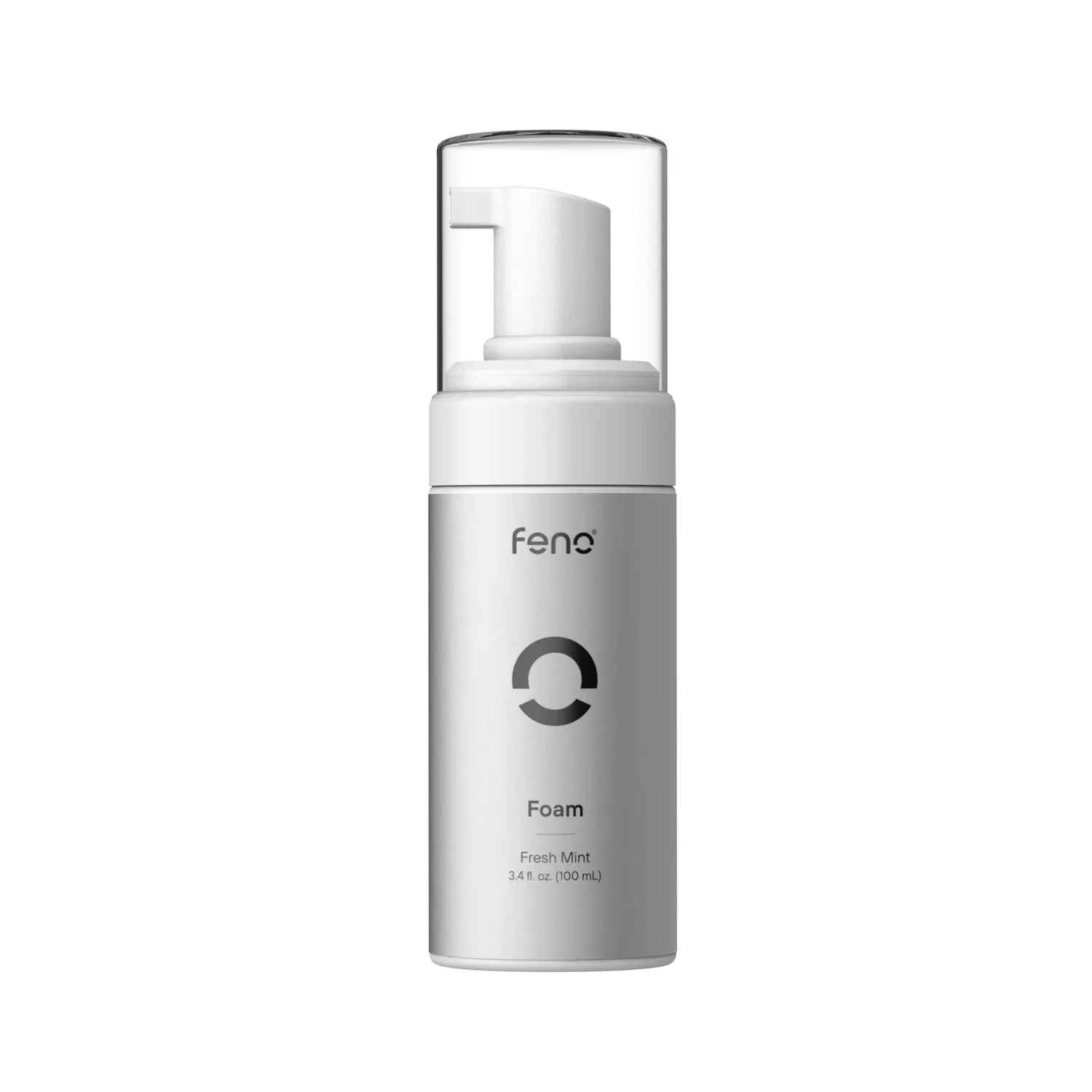
Feno sells a fluoride-free foaming toothpaste, Feno Foam, at $29 for a three-bottle, three-month supply. It's built around xylitol, with hypochlorous acid, which Feno describes as a gentle antimicrobial, and vitamin E. There's no sodium lauryl sulfate and no silica or calcium carbonate abrasives. It contains no fluoride and no nano-hydroxyapatite.
Feno's Foam page is careful about what that means: "It works alongside fluoride, so you don't have to choose. Brush with Feno Foam and keep your fluoride rinse or the treatment your dentist gives you." It cleans. It isn't a cavity drug, and the page carries the standard statement that the product is not intended to diagnose, treat, cure or prevent any disease.
In the U.S., fluoride toothpaste is an OTC drug with a cavity-prevention indication; a fluoride-free toothpaste is a cosmetic that cleans.
Chapter 3 of 6
What goes in instead, and what the research says
Fluoride-free toothpastes usually lean on one of three ingredients for anything beyond cleaning.
- Nano-hydroxyapatite (nHAp): a synthetic form of the mineral enamel is made of. Promising trial data, still a young evidence base.
- Xylitol: a sugar alcohol that cavity bacteria can't ferment. Tested mostly as an add-on to fluoride, not a replacement.
- Arginine: an amino acid studied almost only in combination with fluoride. Insufficient evidence on its own.
- Charcoal, baking soda, essential oils, herbal extracts: cleaning and freshening agents, with no cavity-prevention evidence on the scale of fluoride's.
Nano-hydroxyapatite has the strongest case. An 18-month double-blinded randomized trial in 189 adults compared a fluoride-free hydroxyapatite toothpaste with a 1,450 ppm fluoride paste. No increase in decayed, missing or filled surfaces was seen in 89.3% of the hydroxyapatite group and 87.4% of the fluoride group, and the hydroxyapatite paste met its non-inferiority margin (Frontiers in Public Health, 2023). An updated meta-analysis of 5 clinical and 8 in situ trials concluded that fluoride-free hydroxyapatite products reduce caries compared with placebo (Journal of Dentistry, 2024). Two caveats: several authors on each paper are employees of a hydroxyapatite toothpaste maker, which they disclose, and five clinical trials is a small base beside fluoride's 96.
Xylitol and arginine are weaker cases
A Cochrane review of 10 trials found low-quality evidence that a fluoride toothpaste containing 10% xylitol may reduce caries by about 13% compared with fluoride alone, and insufficient evidence that any other xylitol product prevents cavities in children or adults (Cochrane Database of Systematic Reviews, 2015). The benefit was measured on top of fluoride, not instead of it. Xylitol's clearest property is that bacteria can't use it for fuel, which we covered in our xylitol post. That's real, but it isn't the same as preventing cavities on its own.
Arginine is similar. A scoping review found arginine formulations, nearly all of them 1.5% arginine paired with 1,450 ppm fluoride, outperformed matched controls, but rated the evidence at high risk of bias (Journal of Evidence-Based Dental Practice, 2020). An earlier appraisal concluded there was insufficient evidence to support adding arginine to toothpaste and asked for trials less dependent on commercial interests (Evidence-Based Dentistry, 2017).
Nano-hydroxyapatite has real but still-limited trial evidence; xylitol and arginine have mostly been tested alongside fluoride, not as replacements for it.
Chapter 4 of 6
Who chooses fluoride-free toothpaste
People choose a fluoride-free toothpaste for a few reasons, and they aren't all equal.
The most common one is preference. Some people want fewer active ingredients. Some want to avoid fluoride and understand the trade. Feno's Foam page says exactly that about fluoride: "Left out by design, for people who've chosen to avoid it." The fluoride-free toothpaste benefits people actually report tend to be about texture and ingredients rather than cavities: no SLS, low abrasion, a shorter label. Fair reasons, but not clinical ones.
Fluoride-free is a preference, not a prescription. It suits the people who know what they're giving up and get fluoride another way.
The children question is where people get it backwards
Parents often reach for fluoride-free paste because toddlers swallow toothpaste. The ADA and CDC address that with amount, not by dropping fluoride: a smear the size of a grain of rice from the first tooth until age 3, a pea-sized amount from 3 to 6, and teaching children to spit, not swallow. The concern is dental fluorosis, white flecks or lines on enamel caused by swallowing too much fluoride while permanent teeth are forming. The ADA puts the critical window at about 15 to 30 months of age. The CDC notes that in the U.S. fluorosis is mostly mild and cosmetic, that by about age 8 the enamel of permanent teeth is fully formed, and that older children, teens and adults cannot get it.
Read FDA headlines about children and fluoride closely. The FDA's October 2025 action targeted unapproved ingestible fluoride drug products, meaning products meant to be swallowed, labeled for children under three or not limited to children at high risk of decay. Toothpaste is a topical product under a separate monograph, and in 2025 the ADA restated that it recommends brushing twice daily with fluoride toothpaste for children and adults. If you're considering fluoride-free for a child, talk to a pediatric dentist first.
Preference is a fair reason to go fluoride-free; swallowing worries in toddlers are answered by the amount on the brush, not by removing fluoride.
Chapter 5 of 6
What fluoride-free toothpaste can't do
A fluoride-free toothpaste cleans plaque and food off your teeth, like any toothpaste. What it doesn't do, unless it contains an ingredient with its own anticaries evidence, is lower your cavity risk the way fluoride does. Every "fights cavities" or "strengthens enamel" line on a fluoride-free label deserves two questions: which ingredient, and which trial. None of them carries the ADA Seal for cavity protection.
The stakes aren't small. The National Institute of Dental and Craniofacial Research reports that nearly 90% of U.S. adults aged 20 to 64 have had decay in their teeth, and about 1 in 5 had untreated decay in its most recent survey. Cavities aren't rare, and they aren't a childhood problem you age out of.
Who should be most careful
If you get cavities regularly, have dry mouth, have gum recession that exposes root surfaces, wear braces, or have a dentist who put you on a prescription fluoride product, dropping fluoride without a plan raises your risk. The ADA lists toothpaste, rinses, gels and professionally applied varnish as topical fluoride options, so a fluoride-free paste doesn't have to mean no fluoride at all. The right move is a conversation with your dentist, not a swap at the drugstore.
One more thing no toothpaste can do: fix coverage. A formula only works on the surfaces your brush reaches, and most people leave the same spots under-brushed day after day.
Without fluoride or a proven substitute, a toothpaste cleans but carries no evidence that it lowers cavity risk; higher-risk people should talk to a dentist before switching.
Chapter 6 of 6
How to choose a toothpaste without fluoride, if you've decided to
You won't find a product ranking here. The honest answer to "best toothpaste without fluoride" is a checklist, because brands change every season and the criteria don't.
- Pick the active ingredient on purpose. If cavity protection matters to you, nano-hydroxyapatite is the fluoride-free ingredient with trial data. A cleaning-only paste should be judged as cleaning-only.
- Read the claims against the ingredients. "Fights cavities" on a label with no fluoride and no hydroxyapatite is a claim without an engine.
- Check abrasiveness and foaming agents if your teeth or gums are sensitive. Low-abrasion and SLS-free are differences you can feel.
- Decide where your fluoride will come from, if anywhere: a rinse, a dentist-applied varnish, or a fluoride paste at one of your two daily brushes.
That last point is underused. One option is a fluoride paste at night and a fluoride-free one in the morning, and keep the no-rinse habit after the fluoride brush so it stays on the teeth longer.
Technique and coverage matter more than the tube
Whatever you pick, the paste only helps where bristles put it. If you use a Feno Smartbrush, Feno Foam was formulated to spread across the mouthpiece's 18,000 bristles at once during its 20-second cycle. You can use any toothpaste with it, including a fluoride paste. Feno's own FAQ says so. One honest note: independent trials of other U-shaped automatic brushes have found poorer plaque removal than conventional brushing, and none of them tested Feno. Coverage is a design problem, not something a toothpaste solves.
And floss. No toothpaste reaches between teeth. Feno's FAQ says the same thing about its own brush: keep flossing once a day.
Choose by active ingredient and honest claims, decide where your fluoride will come from, and remember the paste only works where the brush reaches.
The Bottom Line
Frequently Asked Questions
Is Fluoride-Free Toothpaste Good for Your Teeth?
What Is the Difference Between Fluoride and Fluoride-Free Toothpaste?
Does Nano-Hydroxyapatite Work as Well as Fluoride?
Does Feno Foam Contain Fluoride?
Featured Posts
View all
Feno vs Autobrush vs Y-Brush: U-shaped toothbrushes compared
Read article
Toothbrush Head Size: Does Bigger or Smaller Clean Better?
Read article
Floss before or after brushing? The right order, explained
Read article
What Dentists Are Saying About Feno
Read article
Why Does Bad Breath Come Back After Brushing?
Read article