

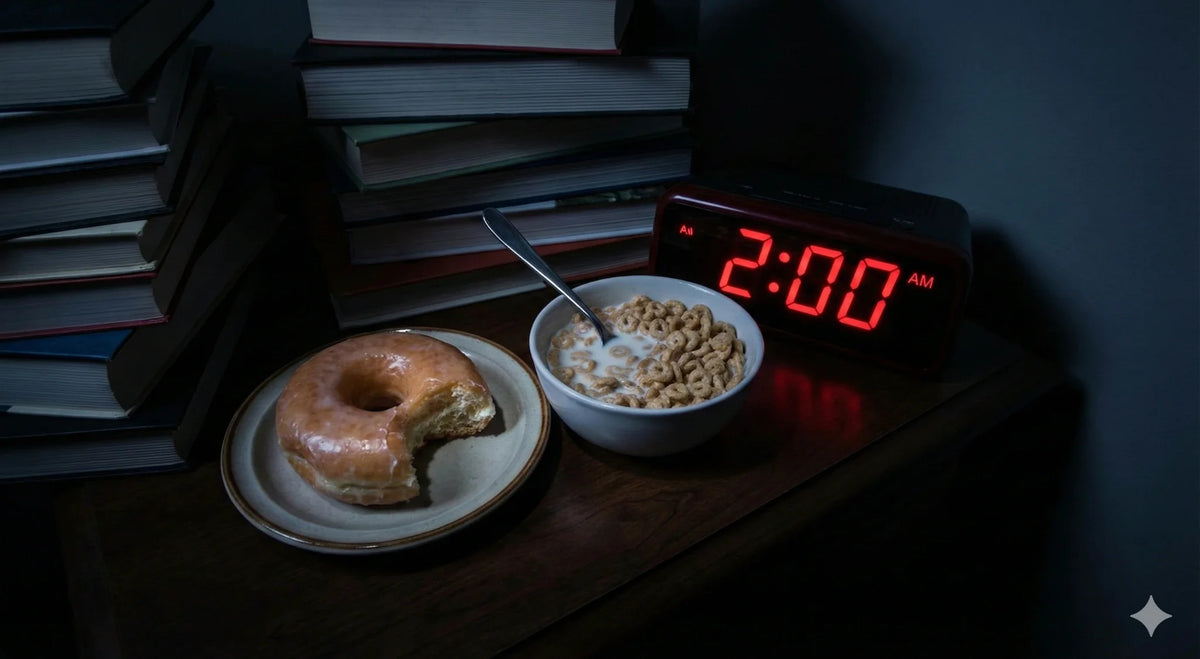
Late-night snacking isn't automatically bad for your teeth. The real risk comes from going to sleep without brushing afterward, and the science behind why is more interesting than you might expect.
TL;DR
- Saliva is your mouth's overnight defense, but it nearly shuts down while you sleep. Eating sugar or refined carbs before bed without brushing lets bacteria produce tooth-eroding acid for hours unchecked. Brush before bed, and if you rinse, do it before brushing. Not after to preserve the fluoride that protects your enamel.
Chapter 1 of 3
Why Nighttime Is Different
During the day, saliva constantly helps protect your mouth. It buffers acids, washes away food debris, and delivers a wide range of antimicrobial proteins that keep bacteria in check. But at night, saliva flow follows a circadian rhythm and drops to its lowest levels during sleep, leaving your teeth more exposed to acid and bacteria for hours at a time.
(BMC Immunology, 2025)
Chapter 2 of 3
What Happens When You Skip Brushing
When you eat sugary or refined carbohydrate-heavy foods and head to bed without brushing, cavity-causing bacteria such as Streptococcus mutans rapidly metabolize those sugars into lactic acid. This acid can drive plaque pH below the critical threshold of about 5.5, the point at which enamel starts to lose minerals, and studies show this drop can occur within minutes after sugar exposure. With saliva flow at night too low to effectively buffer and wash away that acid, your teeth can remain in this demineralizing, low‑pH environment for prolonged periods while you sleep.
Large population studies back this up: frequent snacking and skipping brushing are both independently associated with greater cavity risk, and the combination is especially damaging.
(BMC Oral Health, 2022)
Chapter 3 of 3
A Note on the Rinsing-Then-Brushing Order
If brushing right after a snack isn’t possible, rinsing with water can help dislodge food debris and dilute acids in the short term. But the sequence matters: studies show that rinsing with water after brushing can reduce salivary fluoride availability by about 2.5 times, which weakens toothpaste’s protective effect. A better habit is to rinse first if you need to, then brush, and finally spit out the excess foam without rinsing so fluoride can keep protecting your enamel. Sugar‑free gum is also a well‑supported backup when you can’t brush, because chewing stimulates saliva flow and has been shown in clinical trials to reduce caries when used after meals.
The bottom line: brushing before bed regardless of when you last snacked, is one of the most evidence-backed things you can do for your long-term oral health.
Featured Posts
View all
Feno vs Autobrush vs Y-Brush: U-shaped toothbrushes compared
Read article
Toothbrush Head Size: Does Bigger or Smaller Clean Better?
Read article
Floss before or after brushing? The right order, explained
Read article
What Dentists Are Saying About Feno
Read article
Why Does Bad Breath Come Back After Brushing?
Read article