

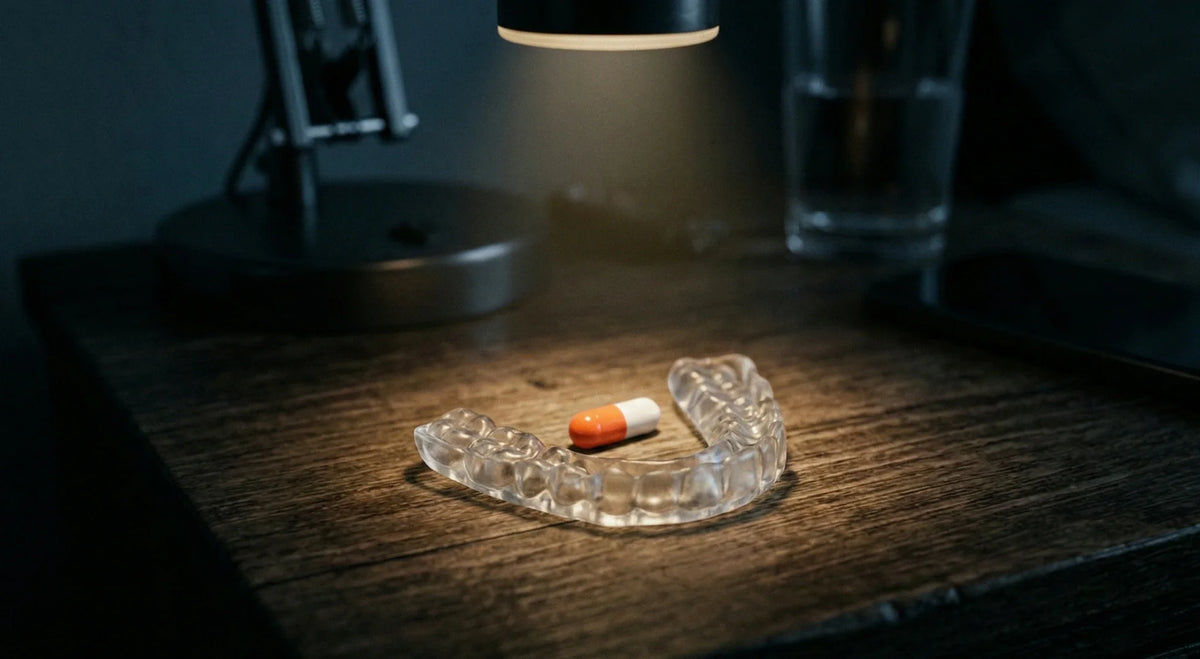
You've probably heard that Adderall can cause dry mouth. But there's another oral side effect that gets almost no attention: jaw clenching and teeth grinding, clinically known as bruxism.
Unlike dry mouth, bruxism often happens unconsciously during sleep, during long focus sessions, or in moments of stress. Many people on stimulant ADHD medication don't realize they're doing it until a dentist points out the wear patterns on their teeth. By that point, enamel loss has already begun.
TL;DR
- Adderall and other amphetamine-based stimulants are linked to bruxism involuntary jaw clenching and teeth grinding, that can quietly wear down enamel over time. It often happens without you noticing, but it's manageable with the right protective habits.
Chapter 1 of 4
What Is Bruxism and Why Does It Matter?
Bruxism is the involuntary grinding or clenching of teeth, either during sleep or while awake. The forces involved are far greater than normal chewing, and over time they cause enamel erosion, increased tooth sensitivity, and in more severe cases, structural damage. Unlike cavities, bruxism damage is purely mechanical. Enamel doesn't grow back, which makes early detection essential.
Chapter 2 of 4
The Link Between Adderall and Jaw Clenching
Amphetamine-class stimulants are among the drugs most consistently associated with drug-induced bruxism. Case reports describe severe amphetamine-induced bruxism, and clinical reviews specifically name amphetamine-type stimulants as a recognized trigger.
(Drug-induced bruxism. Aust Prescr 2019)
The mechanism comes down to neurotransmitters. Adderall increases dopamine and norepinephrine activity, which is what improves focus in people with ADHD but elevated dopamine signaling is also associated with increased jaw muscle activity and clenching. The strongest evidence comes from higher-dose contexts, but the pharmacological mechanism is consistent with therapeutic doses, and many people on standard ADHD medication do report clenching, particularly during peak medication hours or under stress.
Chapter 3 of 4
How Bruxism and Dry Mouth Combine to Accelerate Damage
If you're also experiencing dry mouth, another well-documented stimulant side effect the two conditions compound each other. Saliva normally buffers and remineralizes enamel, making it more resilient. When saliva is reduced, enamel is less protected against mechanical stress. Add grinding on top of that, and enamel wears significantly faster than it would under either condition alone.
(Interaction of dental erosion and bruxism: the amplification of tooth wear. J Calif Dent Assoc. 2011)
Chapter 4 of 4
What You Can Do to Protect Your Teeth
Get a custom night guard. If you grind during sleep, a custom-fitted night guard from your dentist is the most effective way to prevent mechanical damage.
Tell your dentist you're on stimulant medication. This context changes what they look for. Dentists who know your medication history can monitor for early wear and catch problems before significant damage occurs.
Check in with your jaw during peak-dose hours. Clenching is most common when medication activity is highest. Periodically relaxing your jaw and keeping teeth slightly apart during the day can interrupt the habit.
Double down on enamel protection. Fluoride toothpaste and consistent brushing matter more when your enamel is under extra pressure. Tools that make thorough cleaning easier, like the Feno Smartbrush, which uses 18,000 micro-bristles to clean all teeth in 20 seconds, help maintain enamel health even on high-stimulant days.
Talk to your prescribing doctor. If clenching is severe, adjusting dose timing or exploring alternative formulations may help.
The Bottom Line
Teeth grinding is an underrecognized side effect of Adderall and other amphetamine-based ADHD medications. Combined with dry mouth, it creates conditions where enamel wear can progress faster than most people expect. The answer is knowing the signs, talking to your dentist, and putting simple protective habits in place before damage accumulates.
This article is for informational purposes only and is not a substitute for professional dental advice. Consult your prescribing physician and dentist about medication side effects and your individual oral health risks.
Featured Posts
View all
Feno vs Autobrush vs Y-Brush: U-shaped toothbrushes compared
Read article
Toothbrush Head Size: Does Bigger or Smaller Clean Better?
Read article
Floss before or after brushing? The right order, explained
Read article
What Dentists Are Saying About Feno
Read article
Why Does Bad Breath Come Back After Brushing?
Read article