

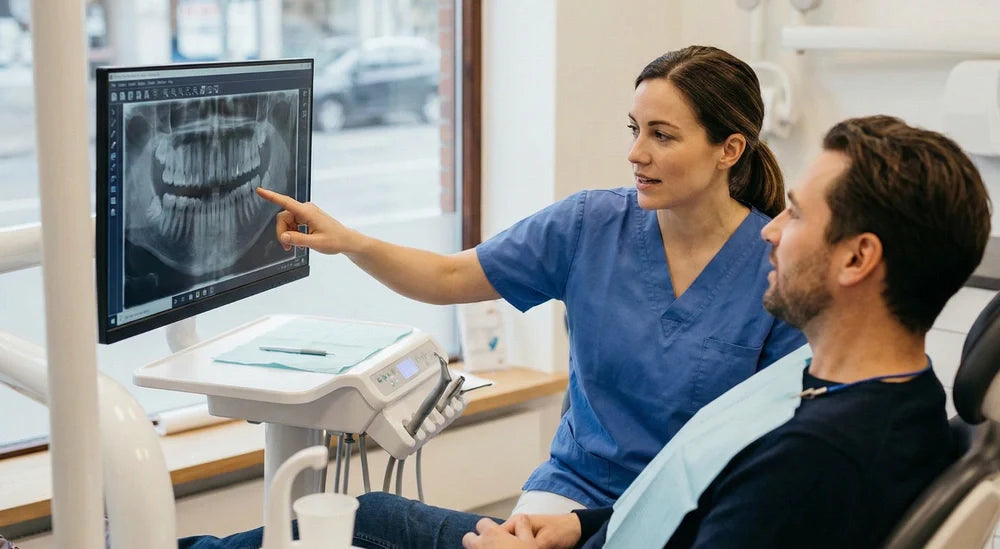
Feeling ignored, rushed, or misinformed is not unique to dentistry. 52% of people across all healthcare settings report that their symptoms were "ignored, dismissed, or not believed" by a provider. But dentistry is no exception. When patients feel neglected or poorly informed by their dentist, trust erodes. Research shows this eroded confidence increases anxiety, delays care-seeking, and can worsen oral and overall health outcomes over time.
TL;DR
- Feeling ignored by your dentist is common, but fixable. By tracking symptoms, requesting written explanations, and using at-home tools with real feedback, you can advocate for yourself and improve communication with your dental provider.
Chapter 1 of 2
What Research Shows
Patients often underreport or downplay symptoms. Even when symptoms affect quality of life, patients frequently hesitate to voice concerns especially when they worry about "bothering" their dentist or fear treatment changes. This means symptoms go undocumented, and clinicians may miss important information.
Short or rushed appointments reduce explanations. Dental communication research consistently shows that time-constrained visits are linked with less thorough history-taking, fewer explanations, and reduced adherence to patient education guidelines. A classic study comparing 5–7.5 minute versus 10-minute appointments found longer visits led to fuller histories and more time spent explaining findings and prevention.
Dental-specific research confirms poor communication is a core complaint. Dental complaint analyses repeatedly highlight feeling dismissed, lack of clear information, and rushed explanations as leading causes of dissatisfaction and lost trust.
Second opinions frequently change diagnosis or treatment. Across healthcare specialties (including dentistry), second opinions lead to changes in diagnosis or treatment in meaningful percentages of cases. In one national program, roughly 15% of patients had their diagnosis changed and 37% had treatment recommendations altered, showing real clinical impact.
Chapter 2 of 2
Protective Steps
Ask for written or plain-language explanations. Research on patient satisfaction shows people consistently request clearer, more accessible information. Ask your dentist to explain findings and treatment options in writing or simple language you can review later. This gives you time to process information, ask follow-up questions, and bring details to a second opinion if needed.
Track symptoms between visits. Keep a simple log of pain, sensitivity, dry mouth, bleeding, or other changes you notice. Structured symptom tracking helps you notice patterns and communicate more accurately with your dentist instead of relying on memory. Patients who track symptoms report feeling more heard and more confident raising concerns with clinicians.
Use at-home tools that provide real feedback. Generic advice without data doesn't help you advocate for yourself. Look for tools that give you concrete, actionable feedback like brushing patterns, plaque coverage, or gum health data that you can discuss with your dentist. This transforms vague concerns ("My gums don't feel great") into specific conversations backed by real evidence. The Feno Smartbrush, for example, monitors plaque and brushing patterns, giving you feedback to share with your dentist and reinforcing areas that need attention.
Seek a second opinion for complex cases. If you're unsure about a major diagnosis or treatment plan, or if you feel dismissed, a second opinion from another dentist can provide clarity. Research shows these often uncover discrepancies with meaningful impact on your care.
Bottom Line
Clear communication and respect are your right, not a luxury. When you track your symptoms, ask for written explanations, and use at-home tools that provide real feedback, you become an active partner in your care not a passive recipient. Feeling heard and informed isn't about finding a "perfect" dentist; it's about advocating for the clarity you deserve.
Featured Posts
View all
Feno vs Autobrush vs Y-Brush: U-shaped toothbrushes compared
Read article
Toothbrush Head Size: Does Bigger or Smaller Clean Better?
Read article
Floss before or after brushing? The right order, explained
Read article
What Dentists Are Saying About Feno
Read article
Why Does Bad Breath Come Back After Brushing?
Read article