

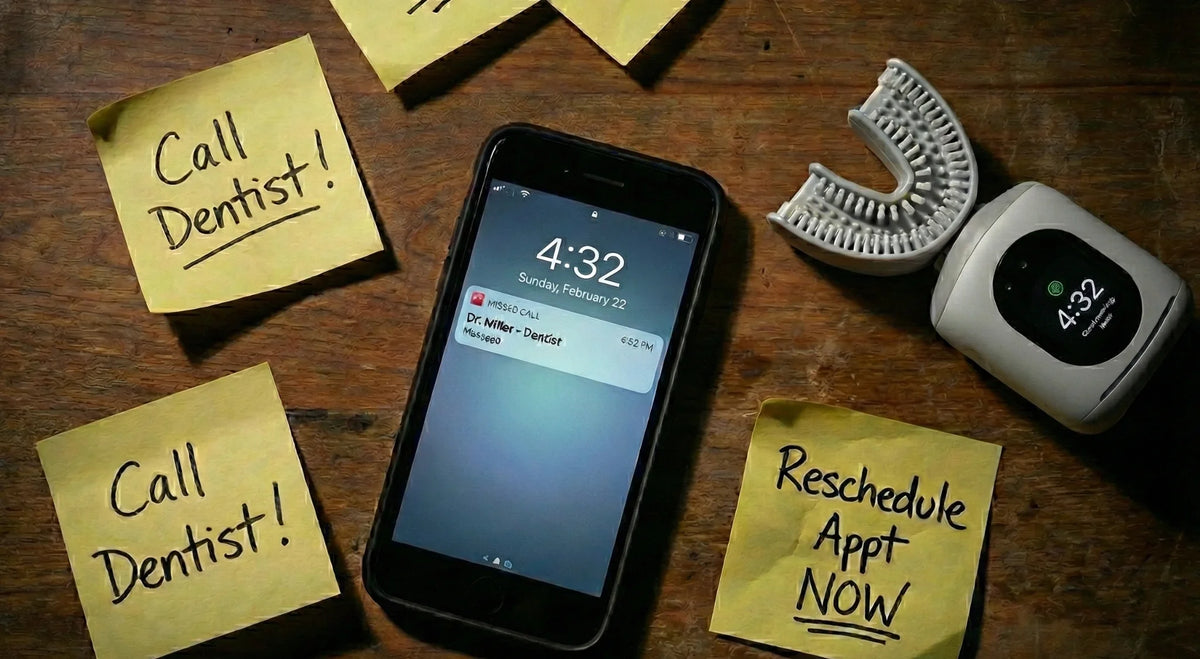
If you have ADHD, you may already know the feeling: you meant to brush before bed, but by the time you got there, the executive function needed to actually do it just wasn't there. Or you booked a dentist appointment, then canceled it because coordinating the logistics felt impossible that week. Then you go in six months later and walk out with a treatment plan that costs more than you expected.
There's a name for this pattern informally, the "dental tax" of ADHD. And while it doesn't show up as a line item on any insurance statement, the research suggests it's very real.
TL;DR
- Research shows people with ADHD experience significantly higher rates of cavities, gum disease, and dental trauma than their neurotypical peers not because of laziness, but because executive dysfunction and co-occurring depression make consistent oral hygiene genuinely harder. Simple, low-friction daily habits can interrupt this cycle before it becomes expensive.
Chapter 1 of 4
ADHD Is Linked to Measurably Worse Oral Health Outcomes
This isn't anecdotal. A systematic review and meta-analysis of children with ADHD found significantly higher rates of decayed tooth surfaces, elevated plaque scores, and increased dental trauma compared to non-ADHD controls. (American Professional Society of ADHD and Related Disorders (APSARD), 2017) A separate cross-sectional study confirmed the trend, finding notably higher rates of both cavities and gingival bleeding in children and adolescents with ADHD. (Healthcare, 2024) The pattern extends into adulthood: adults with ADHD report lower oral health-related quality of life and less frequent dental attendance than healthy controls. (Journal of Clinical Medicine, 2023) Over time, that adds up to a larger lifetime treatment burden more fillings, more periodontal appointments, more procedures that could have been avoided.
Chapter 2 of 4
It's Not Laziness. It's Executive Dysfunction.
ADHD is characterized by difficulty with sustained, habitual tasks including the kind of low-stimulation, repetitive daily routines that oral hygiene requires. (BMC Oral Health, 2026) The same research documenting ADHD's oral health impact makes clear that behavioral and neurological barriers, not motivation or character, are what drive avoidance.
Depression, which co-occurs in a significant portion of people with ADHD, compounds this further. Depressive symptoms are associated with neglected oral hygiene, lower flossing rates, and higher odds of multiple poor oral health outcomes including pain and difficulty eating. (JDR Clinical and Translational Research, 2024) Anhedonia, fatigue, and impaired executive functioning directly interfere with daily routines like brushing what clinicians describe in research as executive dysfunction, playing out in everyday life. (Cureus, 2024)
Put plainly: the brain systems responsible for initiating and sustaining routine tasks are the same ones affected by ADHD and depression. Oral hygiene is a particularly difficult habit for the ADHD nervous system to maintain consistently.
Chapter 3 of 4
How Missed Cleanings Become Costly Procedures
The progression from skipped brushing to expensive dental bills follows a well-documented clinical path. Inadequate plaque removal is a primary risk factor for both gingivitis and periodontitis. (International Dental Journal, 2017) When plaque isn't consistently disrupted, it calcifies, accumulates below the gumline, and triggers chronic inflammation. Gingivitis, left unaddressed, progresses to periodontitis, the irreversible destruction of the bone and tissue supporting the teeth. (Perodontology and Public Health, 2024)
The economic consequences are significant. Economic analyses of periodontal disease show cumulative costs running into thousands of dollars per treatment site over a 20-year horizon once surgical intervention is required. People with chronic conditions who progressed to advanced periodontal disease had measurably higher combined dental and medical expenditures than those who maintained preventive care. (BMC Health Services Research, 2006)
The chain is clear: skipped prevention → plaque accumulation → gingival inflammation → periodontitis → procedures that are more invasive, more uncomfortable, and far more expensive.
Chapter 4 of 4
Small, Consistent Habits Are the Real Intervention
The prevention evidence is equally strong. Better daily plaque control, brushing twice daily and cleaning between teeth is consistently associated with lower prevalence of periodontitis. (International Dental Journal, 2017) Regular preventive maintenance reduces disease recurrence and lowers long-term costs compared to repeated treatment cycles. (Perodontology and Public Health, 2024)
For people with ADHD, the key word is consistent, not perfect. Because executive dysfunction is the barrier, the most effective strategies reduce friction in the habit itself fewer decisions, shorter task duration, and ideally some structure that removes the initiation challenge. Tools like the Feno Smartbrush: 18,000 bristles and 20-second cleaning cycle built to deliver a thorough clean in the kind of short, structured window that actually works for ADHD brains.
The Bottom Line
The dental tax of ADHD is real and measurable. ADHD and depression create genuine neurological barriers to consistent oral care, and those barriers if unaddressed, lead to a predictable accumulation of oral disease and treatment costs over time. But the same research that documents the problem points to the solution: consistent preventive habits, even simple ones, meaningfully reduce the risk of disease progression. The barrier isn't character. The solution doesn't have to be complicated.
Featured Posts
View all
Feno vs Autobrush vs Y-Brush: U-shaped toothbrushes compared
Read article
Toothbrush Head Size: Does Bigger or Smaller Clean Better?
Read article
Floss before or after brushing? The right order, explained
Read article
What Dentists Are Saying About Feno
Read article
Why Does Bad Breath Come Back After Brushing?
Read article